
Healthy Living
The Scoop on Poop
Nature calls, but do you know the message it is leaving you? Next time you head to the loo, take this article as your reading material. You may learn a thing or two about what your poop is trying to tell you.
Everybody Poops; What’s Normal?
Some people poop three times a day, others three times a week. Maybe your morning cup of joe jumpstarts your system, maybe your poop is normally very dark brown or maybe it’s typically medium brown. You know what is normal for you.
When your poop starts varying from your “normal” for more than a few days, that’s when it’s time to take note of what’s going on in the toilet bowl. Focus on these changes to these two aspects of your stool:
- Color
- Consistency
One pit stop before we get going. If you believe you are bleeding from the stomach or rectum, please seek immediate medical attention at your closest emergency room. It could be a sign of a more serious condition, like colorectal cancer or inflammatory bowel disease.
The Poop Palette: Stool Colors and What They Mean
Let’s first flush out the details on the color of your poop with our poop palette.

Brown
When you think of poop, the first color that pops into mind is brown, and for good reason. Brown poop is healthy and normal. It is caused by a compound in bile called bilirubin.
Sometimes poop varies from brown, and that’s when it’s time to take note.
Green
If you’ve recently had a green smoothie or a healthy portion of kale, you may find yourself having green poop. Don’t fret, it will likely return to its normal brown shade too.
If you are having diarrhea, focus on staying hydrated. If you believe you are having a medical emergency, call 911 or visit your closest emergency room.
Pale Brown
Bilirubin causes poop to be a shade of brown, and the lack of it causes it to pale in color. This is most commonly associated with gallbladder, liver and pancreas conditions. Keep an eye on your poop, and if it continues, it may be time to visit your doctor.
Yellow
If you have been eating a diet extremely high in fat, you may see yellow poop. If the poop floats or is very greasy, you may want to speak to a doctor about fat absorption, as yellow stool can be associated with liver disease, pancreatitis and small intestine conditions, like celiac disease.
Red
Have you recently eaten beets or red food dye? Sometimes, this may result in red stool. More seriously, large amounts of blood in stool may indicate bleeding, and this combined with lightheadedness needs immediate medical attention. Please call 911 or visit your closest emergency room if you see large amounts of blood in your stool.
Black
Your blueberry smoothie may be to blame for black stool. Blood sausage and black licorice can also cause black poop. In addition, some medications and supplements, like iron supplements, may cause black stools.
However, black stool that smells especially crappy may mean there is bleeding in the stomach or small intestine. If you believe you are bleeding in your stomach or small intestine, call 911 or visit your closest emergency room for immediate medical attention.
Consistency is Key: Seven Types of Poop
It’s time to get moving with poop consistency, the second way to analyze your poop. The Bristol Stool Chart categorizes poop into seven categories, to help patients identify and understand the appearance of their poop.
Constipation

Type 1: Corn kernels: Little pebbles, may require straining to pass

Type 2: Lumpy sausage: Shaped like a lumpy sausage
The longer your stool remains in your colon, the harder it becomes, and the more difficult it is to pass. Constipation is normal! One third of older adults experience constipation from time to time, but that doesn’t make it any less uncomfortable. Focus on drinking liquids, increasing your fiber intake and getting exercise.
Constipation may also be a warning sign of something more serious, like colorectal cancer. If you are experiencing blood in your stool, stomach pains, vomiting, are losing weight without trying to, along with constipation, call your doctor.
Healthy Stools

Type 3: Corn on the cob – shaped like a sausage, but with cracks and crevices, like corn on the cob

Type 4: Soft serve ice cream – this poop moves and grooves smoothly out of your digestive system
Type 3 and 4 poop are what doctors like to see. Keep up the great work by maintaining your fiber intake, drinking water and moving regularly. It’s normal for your poop to oscillate between different consistencies, but ultimately, it should return to type 3 or 4 after a few days.
Almost Diarrhea

Type 5: Steel-Cut Oatmeal- Soft, mushy poop with clear edges that passes very easily
Type 5 poop happens! Keep an eye on your digestive system over the next few days, you may have eaten something that didn’t agree with you, or you may be stressed. If you start to feel crappy or head into type 6 or 7 poop territory, it may be time to call your doctor.
Diarrhea

Type 6: Applesauce- Fluffy around the edges, more mushy than type 5
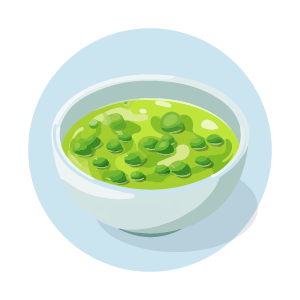
Type 7: Split Pea Soup – completely liquid, very easy to pass
Type 6 and 7 poop is diarrhea. This means that your stools are passing in your digestive system too quickly, and your bowel may not be absorbing water. Focus on hydration, and if it becomes chronic or debilitating, call your doctor.
The No. 2 Takeaway
Your poop can tell you a lot about your health. Keep an eye out for any changes in your stool’s consistency and color.
Seek immediate medical care if you are experiencing:
- Black, tar-like, foul-smelling poop
- Blood in your poop
It may be time to call your primary care physician or gastroenterologist if your poop varies from brown or type 3 and 4 for more than a few days.