
Healthy Living
Recognizing Rashes in Kids: What’s Normal and What to Watch
If you’ve ever spotted a strange rash on your child’s skin and wondered what it was, you’re not alone. Rashes pop up in kids all the time, sometimes from heat, other times from a bug bite, a new soap or just playing outside all day. Most of the time, they’re harmless and go away with little care.
But because different rashes can look pretty similar, it’s not always easy to tell what’s going on. Some come with itching, others don’t. A few spread fast, while others stick around in one spot. Knowing the basics can help you feel more confident about what you’re seeing and what steps to take next, whether it’s treating it at home or checking in with your pediatrician.
Heat Rash (Prickly Heat/Miliaria)
What it looks like:
Heat rash often shows up as small pink or red bumps or blisters, usually in areas where skin folds or clothing traps heat like the neck, armpits, elbows or thighs. It’s most common in babies and young children during hot or humid weather.
What causes it:
This rash happens when sweat gland pores get blocked and perspiration can’t escape, leading to irritation under the skin.
How to manage it:
To help soothe heat rash, keep your child’s skin cool and dry. Dress them in loose, breathable clothing and try to keep the environment well ventilated with fans or air conditioning. Avoid using skin ointments and let affected areas stay uncovered when possible to allow airflow.
Diaper Rash (Diaper Dermatitis)
What it looks like:
Diaper rash appears as a bright red irritation in the diaper area. If it’s caused by a yeast (Candida) infection, small red spots may show up in the folds of the skin.
What causes it:
The rash can develop when an infant’s skin stays in contact with urine or stool too long. Moisture, friction and sometimes a fungal or bacterial infection may all play a role.
How to manage it:
Changing diapers frequently and gently washing the area with mild soap and water can help. Barrier creams like zinc oxide or petroleum jelly may protect the skin. If your pediatrician confirms a fungal infection, an antifungal cream may be needed. For bacterial causes, an antibiotic ointment may be recommended.
Atopic Dermatitis (Eczema)
What it looks like:
Eczema often causes red, scaly and itchy patches that can come and go. In infants, these may appear on the face, scalp, arms or legs. In older children, patches are more common on the hands, the bends of the elbows or behind the knees.
What causes it:
Atopic dermatitis is linked to a gene variation that affects the skin’s ability to retain moisture and protect against irritants. It tends to run in families and can flare up with cold, dry air, allergens or skin irritants.
How to manage it:
Using fragrance-free moisturizers and gentle soaps can help. Applying a moisturizer right after bathing can lock in hydration. During flare-ups, your child’s doctor may suggest corticosteroid cream. Antihistamines may help ease the itch and avoiding known allergy triggers may reduce symptoms.
Hives (Urticaria)
What it looks like:
Hives are raised, itchy welts that can show up suddenly and then disappear just as fast. The shape and size may vary and the rash can move from one area of the body to another.
What causes it:
Hives may be triggered by a variety of things, including allergies, cold temperatures, water or pressure on the skin.
How to manage it:
Most hives go away on their own and don’t need treatment. If the rash continues daily or nearly every day for more than six weeks, it may be a sign of chronic hives. In that case, it’s a good idea to consult a healthcare provider to find out what’s going on and discuss treatment options.
Impetigo
What it looks like:
Impetigo causes raw-looking sores or blisters that eventually form a thick, yellowish crust. These usually show up around the mouth or nose but can also appear on the arms or legs.
What causes it:
This skin infection is caused by bacteria, usually Staphylococcus aureus or Streptococcus pyogenes. It often begins after a small injury to the skin, such as a scratch or an insect bite.
Is it contagious?
Yes. Impetigo spreads easily through skin-to-skin contact or by sharing items like towels or clothing.
How to manage it:
A doctor may prescribe a topical or oral antibiotic depending on how widespread the infection is. It’s important to wash hands thoroughly after touching the sores and to keep the area clean to help prevent spreading it to others.
Molluscum Contagiosum
What it looks like:
This condition causes small, dome-shaped bumps that are flesh-colored or pearly. The bumps often have a tiny dimple in the center.
What causes it:
Molluscum contagiosum is caused by a virus in the poxvirus family. It’s commonly seen on the chest, arms or legs but can appear anywhere on the body.
Is it contagious?
Yes. It can spread through direct contact or by sharing towels and other items.
How to manage it:
In many children, the bumps go away on their own over time, typically within 6 to 18 months. To help prevent spreading, avoid scratching and do not share personal items. In some cases, a healthcare provider may suggest treatment if the bumps are bothersome or causing irritation.
Tinea (Ringworm)
What it looks like:
Tinea causes ring-shaped, scaly red patches that often have clear skin in the middle and a raised border. The rash can show up on the body, scalp, feet or groin.
What causes it:
Tinea is a common fungal infection that grows well in warm, damp places. It can spread from one person to another or from pets, objects or surfaces.
Is it contagious?
Yes. It spreads through direct contact and shared items like hairbrushes, hats or sports equipment.
How to manage it:
Mild cases can often be treated with an over-the-counter antifungal cream. For infections on the scalp or more severe cases, your doctor may recommend an oral antifungal medicine. It’s also important to check pets and treat any other close contacts who have symptoms.
Hand, Foot and Mouth Disease (HFMD)
What it looks like:
This viral illness causes small blisters or bumps on the hands, feet, inside the mouth and sometimes on the buttocks. A child may also have a fever, sore throat or runny nose before the rash appears.
What causes it:
HFMD is caused by the Coxsackie virus. It is very common in young children and can spread easily in places like daycare centers or schools.
Is it contagious?
Yes. Children can spread the virus through saliva, mucus or stool, even after symptoms improve.
How to manage it:
There is no specific treatment, but you can help your child feel more comfortable with rest, plenty of fluids and over-the-counter pain relief if needed. It’s important to keep your child home while they have symptoms to help prevent spreading the illness.
Overlapping Symptoms Among Common Rashes in Children
Itchy or Irritated Skin
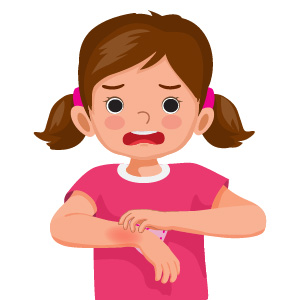
Heat rash, eczema, hives, tinea and HFMD all include itchiness or skin discomfort as a symptom.
Difference:
- Heat rash is due to blocked sweat glands.
- Eczema is chronic and related to skin barrier dysfunction.
- Hives appear and disappear quickly and can move across the body.
- Tinea causes persistent, ring-like lesions due to fungus.
- HFMD may itch or cause pain, but it’s from a virus.
Red or Raised Bumps
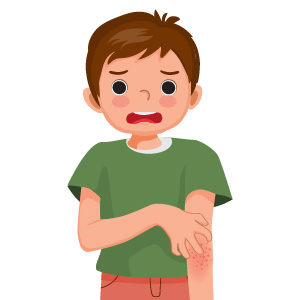
Heat rash, hives, molluscum contagiosum, impetigo and HFMD can all present with small, raised bumps.
Difference:
- Heat rash appears in hot spots and clears with cooling.
- Hives are welts that come and go.
- Molluscum bumps are dome-shaped with a central dimple.
- Impetigo begins as blisters or sores that crust.
- HFMD blisters are part of a viral illness and appear on hands, feet and inside the mouth.
Moisture-Related Triggers
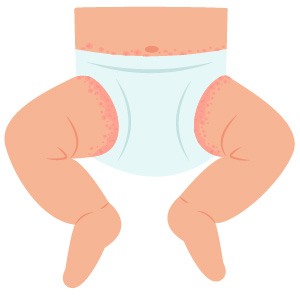
Heat rash, diaper rash and tinea thrive in warm, damp environments.
Difference:
- Heat rash is blocked sweat.
- Diaper rash comes from prolonged contact with urine/stool.
- Tinea is fungal and contagious.
Contagious Conditions
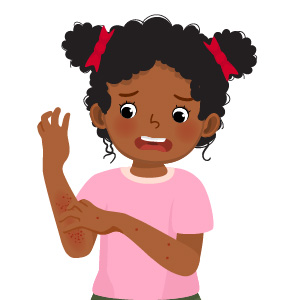
Impetigo, molluscum contagiosum, tinea and HFMD are contagious.
Difference:
- Impetigo spreads through contact with infected skin or items.
- Molluscum spreads by skin contact or shared towels.
- Tinea spreads through people, animals or objects.
- HFMD spreads through saliva, mucus or stool.
Distinctive Features to Look For
| Condition | Distinguishing Feature |
| Heat Rash | Heat Rash Appears in folds or under clothing during hot weather |
| Diaper Rash | Limited to diaper area; may involve yeast or bacteria |
| Eczema (Atopic Dermatitis) | Chronic, dry, scaly patches often in specific body areas |
| Hives | Raised welts that come and go, often allergy-related |
| Impetigo | Yellowish crusted sores, often around mouth or nose |
| Molluscum Contagiosum | Flesh-colored bumps with central dimple |
| Tinea (Ringworm) | Ring-shaped, scaly red patch with clear center |
| HFMD | HFMD Sores on hands, feet, mouth, sometimes with fever or cold-like symptoms |
While most childhood rashes aren’t cause for alarm, it’s always okay to reach out to your pediatrician if something doesn’t look right, if your child seems especially uncomfortable or if the rash isn’t getting better. Trust your instincts because you're the one who knows your child best.