
Healthy Living
How to Read a Nutrition Facts Label
Understanding what goes into your food is a simple but powerful step toward better health. Reading the Nutrition Facts label helps you choose nutrient-dense foods, control calories, and limit harmful ingredients that increase the risk of chronic conditions, such as heart disease. By using this guide, you can make more informed eating choices that support your long-term well-being.
Key Sections of a Nutrition Label
When you pick up a food package, the Nutrition Facts label shows several essential parts. Here's how to read them and what each part means for your health:
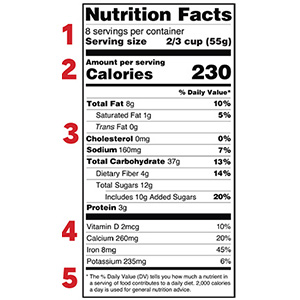
- Serving Size tells you the amount that counts as one “serving,” and how many servings are in the container. Because the serving size often doesn’t match what we actually eat, it helps you gauge how many calories and nutrients you consume.
- Calories indicate how much energy you get from one serving. If you eat more than one serving, you’re taking in more calories, so checking calories helps you manage calorie/energy intake and maintain a healthy weight.
- Nutrients to limit include saturated fat, trans fat, sodium and added sugars. Eating too much of these can hurt heart health. The label highlights these so you can choose products with lower amounts, which helps reduce the risk of heart disease.
- Nutrients to look for include dietary fiber, vitamins and minerals like calcium, potassium, iron and vitamin D. These nutrients support overall health and help you feel full.
- % Daily Value (DV) indicates how much of a nutrient in one serving contributes to your overall daily diet based on a 2,000-calorie reference. Use it as a quick guide:
- 5% DV or less – low amount
- 20% DV or more – high amount
By paying attention to these sections, you can more accurately assess what you're consuming and make informed choices that support heart health and overall well-being.
Understanding % Daily Value
A low % DV is beneficial for limiting certain nutrients, such as saturated fat or sodium. A high % DV is good for beneficial nutrients like fiber or vitamins. When comparing % DVs of similar products, choose the one with a lower % DV for harmful nutrients and a higher % DV for beneficial ones. And remember to account for the number of servings you actually eat.
Tips for Smarter Label Reading
Here are some practical ways to get the most out of nutrition labels:
- Compare similar products side by side. Use the "per 100 g/ml" or serving-size information to select the option with the least sodium, saturated fat, trans fat or added sugars.
- Be cautious of front-of-package claims like “low fat” or “light” and check the full Nutrition Facts panel and ingredients list.
- Look at the overall nutrient profile. Choose items low in sodium (aim for options with less than 120mg of sodium per 100g), added sugars, and unhealthy fats, but higher in fiber, vitamins, and minerals when possible.
In Conclusion
Nutrition labels help you understand exactly what's in the foods you eat. They make it easier to spot items higher in sodium, sugar or unhealthy fats and choose options that better support heart health. By comparing labels, you can select foods that align with your goals, whether that's managing your weight or reducing your risk of heart disease. They're a simple tool to help you make healthier everyday choices.